The Bad Dürrenberg Shaman
The next burial I would like to discuss is that of a Mesolithic shaman woman, found in Bad Dürrenberg , Germany and dating back to 7000 BCE. Bad Dürrenberg is situated in eastern Germany, perched on a bluff overlooking the Saale River To put the burial into context, the Mesolithic period falls between the last glaciation at the end of the Palaeolithic (~10,000 BCE) and the beginning of the Neolithic (~5000 BCE), when farming communities began to be established.
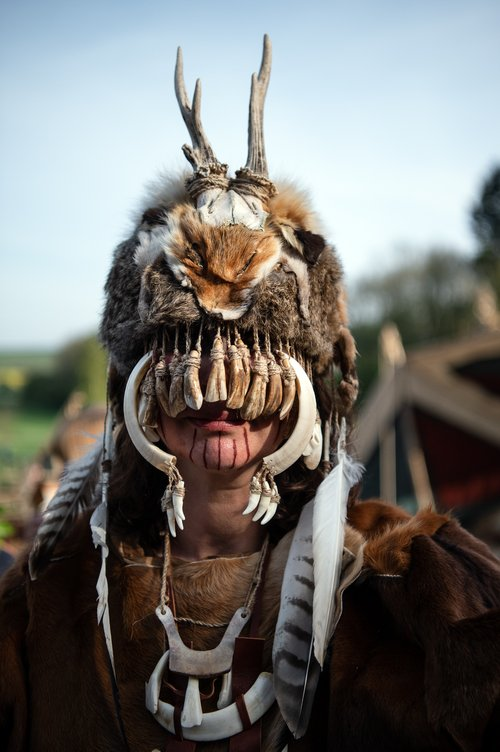
During the Mesolithic, people hunted in groups, targeting red and roe deer, auroch, elk, sheep, goat, and ibex. Marine mammals, fish, and shellfish were frequently eaten in coastal areas, and huge shell middens are associated with Mesolithic sites along the coast, whilst plants such as hazelnuts, acorns, and nettles became an important part of Mesolithic diets. During the Mesolithic period, humans began the first steps in land management. Swamps and wetlands were purposely burned, whilst stone axes were used to cut down trees for fires, and for building houses and fishing vessels.
Mesolithic hunter-gatherers moved seasonally, following animal migrations and vegetation changes. In many areas, large permanent or semi-permanent communities were located on the coasts, with smaller temporary hunting camps located further inland.
It is widely thought that at this time human spirituality became more specialized, with specific people in the community assigned to interact with the spirit world, often with the help of trances or psychoactive substances.
The grave was first exposed in 1934 during construction work and new excavations beginning in 2019 allowed specialists to carry out more modern research on the grave.
This fascinating, rich burial contained the remains of a woman who would have been in her thirties or forties at the time of death.
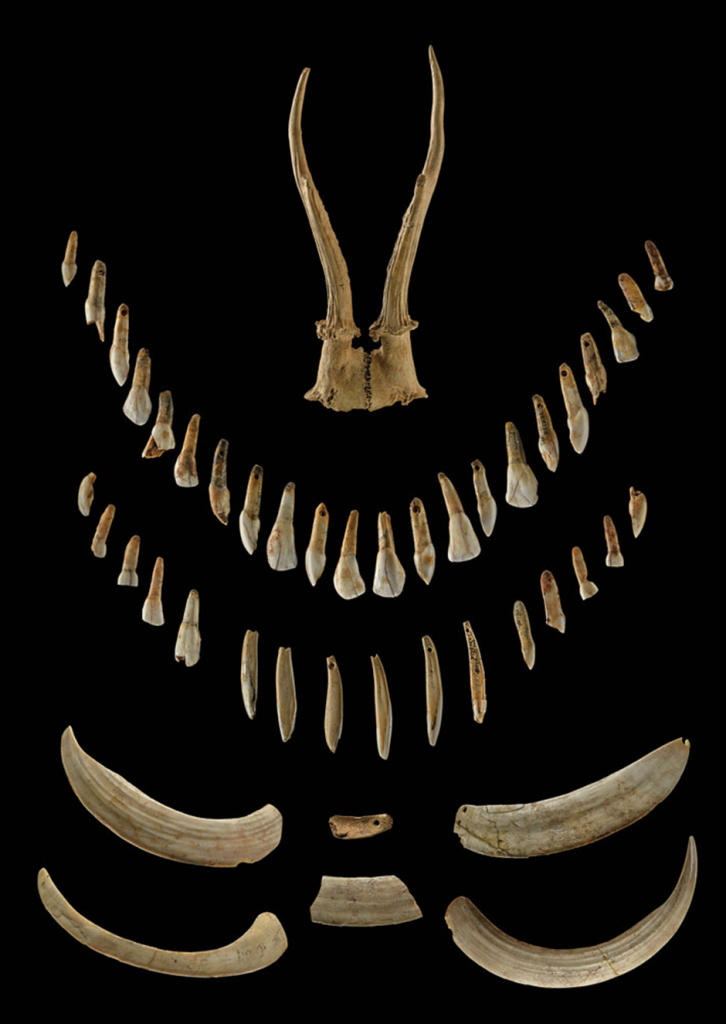
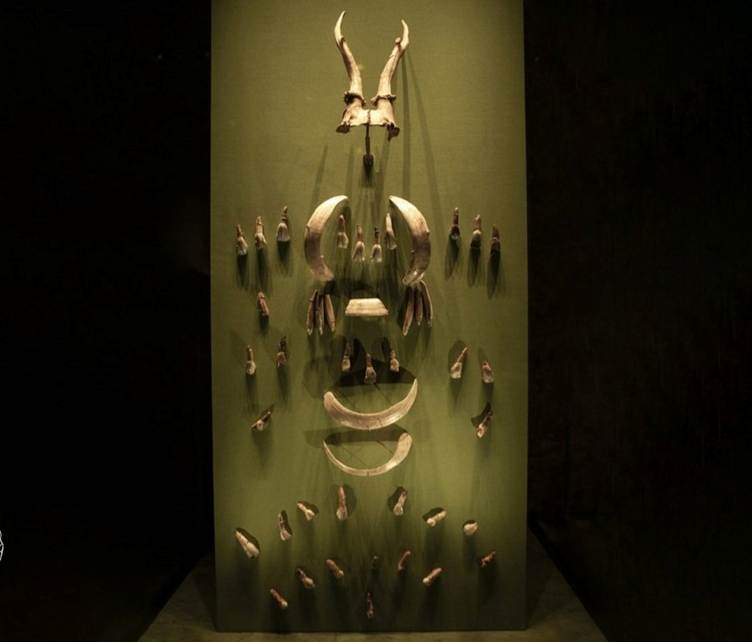
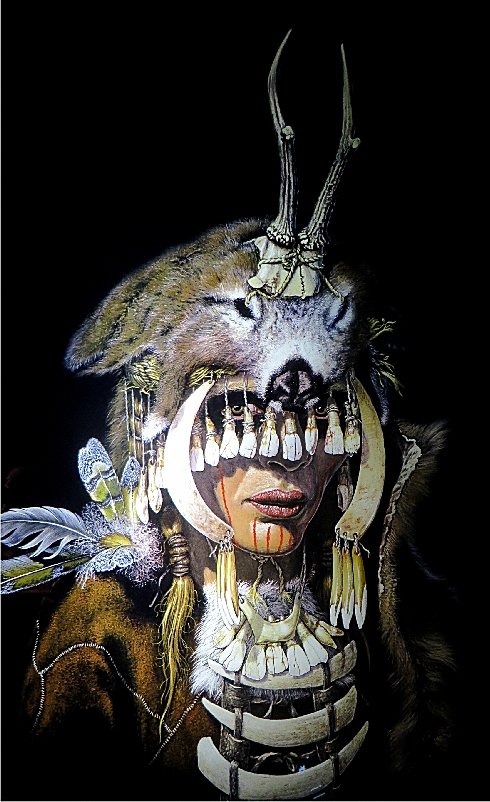
Amongst her extraordinary grave goods were a roe deer antler headdress, animal-tooth pendants, drilled boar tusks, traces of red ochre and microscopic feather fragments, found to be goose, suggesting a feather-adorned headdress.
There were many mussel shells, turtle shells, and bird bones. These would have been able to be sewn on to fabric, probably a ceremonial costume. Each element of the costume was likely chosen for its symbolic value, reflecting the shaman’s connection to the natural world and the spiritual realm. Prey species such as deer and bison or aurochs may have evoked rituals intended to provide luck in the hunt.
One of the finds I think is most beautiful is the leg bone of a crane, fashioned into a container for tiny microliths or flint blades and bone points. Marsh birds such as cranes may have been seen to have liminal magic, capable of flying in the heavens, nesting on the ground, and hunting in water – a boundary – crossing power the shaman might have called upon in her efforts to cross into the spirit world.
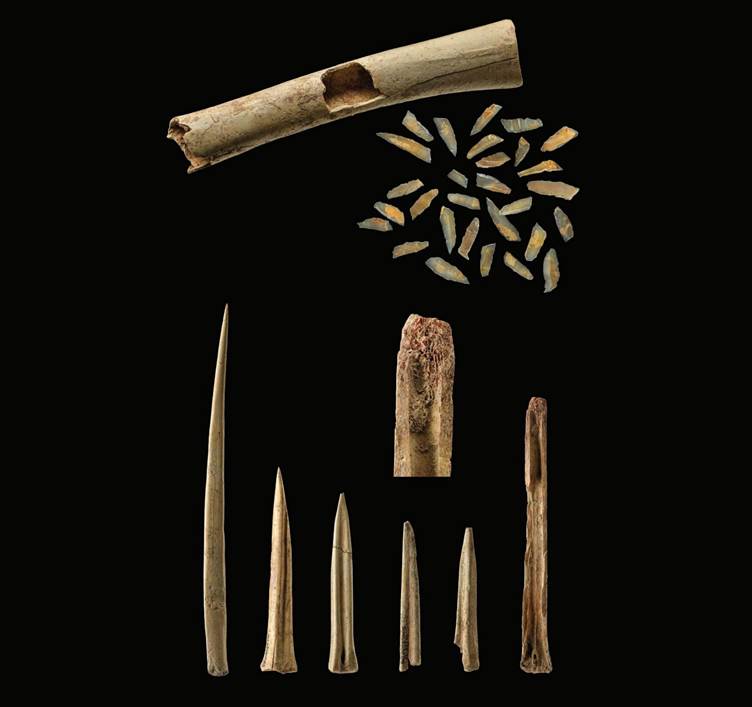
Image of Crane bone container and bone points © Juraj Lipták
Modern analysis showed that the woman was laid to rest in a rectangular shaft lined with red ochre, at the centre of an octagon made from of pieces of white quartz. This was clearly a very special and highly unusual burial, uniquely rich for the period.
Analysis of the grave goods further showed that the shaman was connected to a wider community as some of the flints found in the grave came from more than 10 different rock sources, some located more than 50 miles away, meaning that it was likely people travelled a good distance to honour her dying.
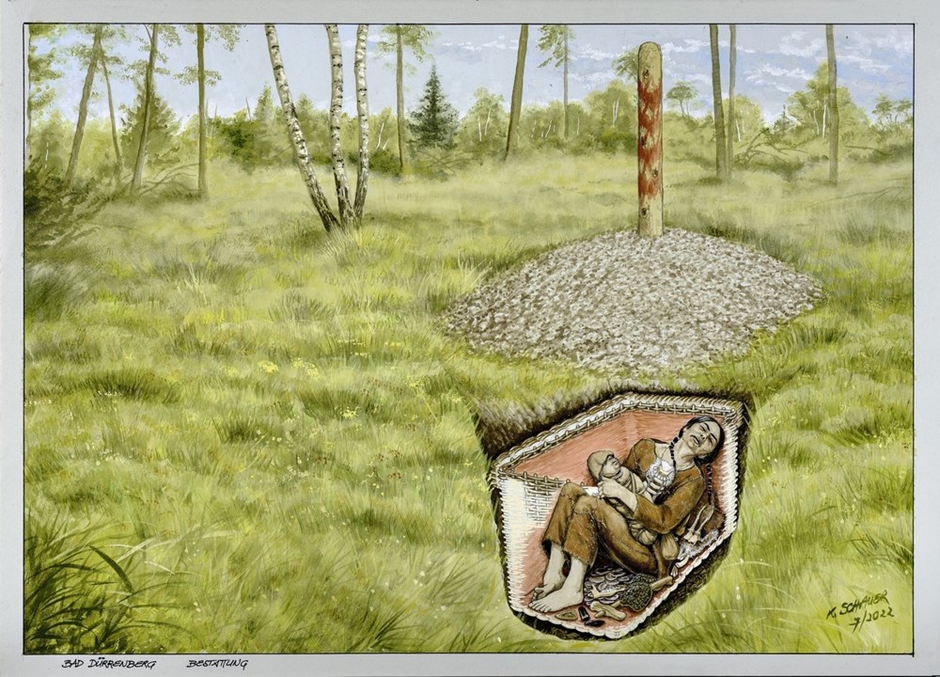
Artistic reconstruction of the Bad Dürrenberg © Karol Schauer
Over time, archaeologists suggested that, from an early age, this woman had been singled out as different from other members of her community, a shaman who served as an intermediary between her community and the spirit world. In her role as a shaman, the woman may have communicated with supernatural powers on behalf of the sick and injured or to ensure success in the hunt. Even in death, her unusually rich grave marked her as exceptional.
In addition to these grave goods, there are two aspects of her remains to consider in relation to her role within the community. Examination of her teeth showed that they had been deliberately filed down, exposing the pulp – an extremely painful process, potentially part of a pain ritual to test her strength and readiness for the role?
Also, her spine revealed a deformity that may have further enhanced her other-worldliness. She had an unusual growth or nub of bone inside of her second cervical vertebra that would have compressed the vertebral artery when she tilted her head back and to the left, cutting off blood flow to her brain. This movement would bring on a rare condition called nystagmus, a rhythmic twitch of the eyeball. She may have also experienced auditory or visual hallucinations, seizures and fainting. By intentionally tilting her head in this manner, the Shaman may have effectively brought on a near instantaneous altered state of consciousness, as blood flow was slowed or temporarily halted to her brain.
Compared with other known Mesolithic skeletons, the woman’s bones showed little sign of stress or injury and muscle attachments were not as well developed as other Mesolithic women, suggesting she spent more time sitting than working.
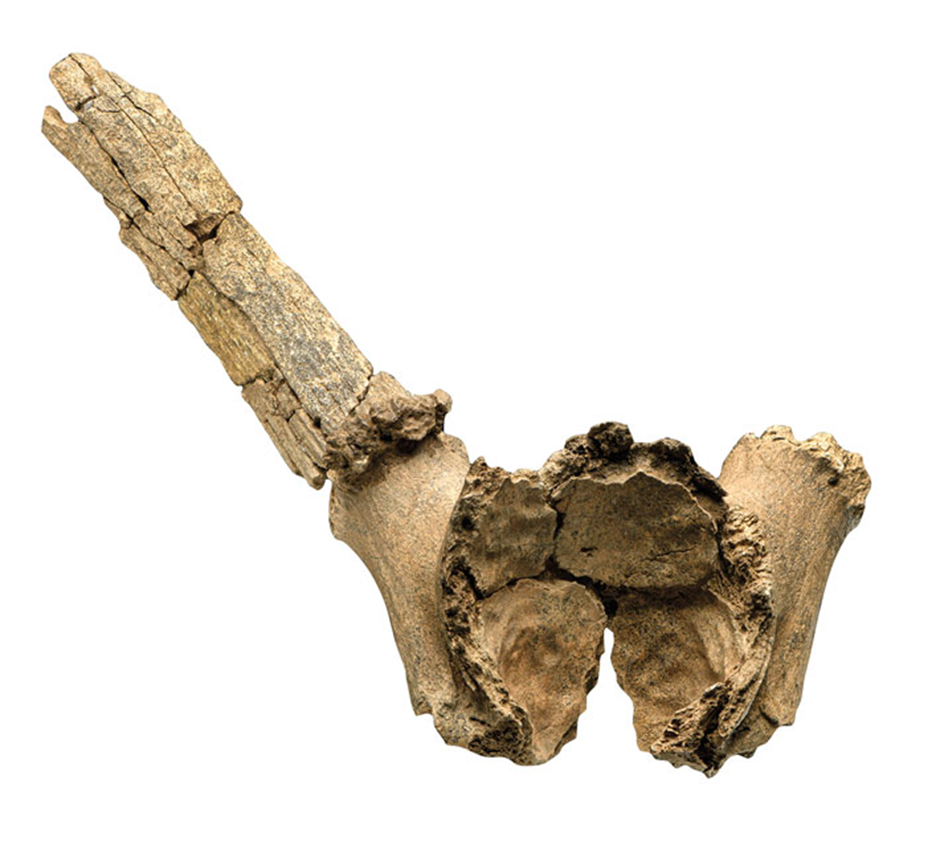
The last thing to highlight is the presence of a separate pit directly in front of the burial that had been created approximately 600 years after the woman’s interment. It contained two masks made from red deer antlers, together with traces of songbird and grouse feathers and remains of lime bast fibers, suggesting that these deer antlers were once part of a complex ceremonial headdress. Both headdresses were pointed toward the shaman’s grave, a position that is unlikely to have been accidental. The fact that this pit was dug so long after her burial suggests that the shaman woman’s grave continued to serve as a ritual focal point long after her death.
So, a very complex, sophisticated burial for Mesolithic times, but one that I think still has resonance today. When I visited The World of Stonehenge Exhibition at The British Museum in 2022, my fascination with this burial began. I sat beside her shamanic tools and their power was so very present after all these millenia, it took my breath away. It was astounding, I was giddy and overwhelmed – such a magnetic pull that I still feel today as I write this.
But the issues relevant to our lives today that I would like to consider are around disability and the attitude and position of people with disabilities in our society. This woman had quite a severe disability – movement of her neck would have triggered neurological, physical and mental disturbances. Her ability to carry out heavy work woud have been impared, as demonstrated by her less robust musculo- skeletal condition. She would, undoubtedly have behaviours and appearance that would have been out of the ordinary. And yet, the richness of her grave goods, the wider community involved, and the ongoing honouring of her grave over considerable time, means that she was a hugely important member of society. Others in her tribe would have needed to hunt to provide food for her, whilst she tended the tribe’s spiritual and physical health. She was seen as high status, of great worth to the community.
Compare this to the way that our society views disability, illness and in fact anyone who is not able to meet the current expectations of a culture based on productivity as success. Disabled people in our country face discrimination, scapegoating and unnecessary struggles each and every day. Our health systems fail them. I will never forget the message given during Covid times that “it is only the frail and sick that are at risk of dying” – as if those lives were of less value than the fit and able. It was terrifying, knowing I and people I cared for, were in that group and largely dismissed as expendable.
We could learn much from Mesolithic peoples, who saw other strengths, skills, wisdom in this woman, not weakness. They saw her gifts as equal, if not higher to the more physically able. How different could our society be if our attitudes changed?
And then the idea that she was remembered in some form for 600 years is astounding. 20 – 30 generations later, someone honoured her grave by carefully placing the antlered headdresses pointing to her grave. We have forgotten how to remember. How many generations can you trace back. We probably know where our parents and grandparents are buried, but our great grandparents? 5 generations back? Our sense of connection to ancestry has long gone and with it we have lost the knowledge and sense of holding that ancestry can provide.
I wonder what tales were still told of this shaman woman all those years later. For ritual objects to be placed near her indicates to me that her power as a shaman was still respected. Maybe they did not know her name, maybe they did. Maybe she had been relegated to distant ancestry, rather than as a singular human, but that in itself was honoured. I wish I knew my lineage more deeply. I wish my bones knew their stories and the wisdom, remembering these ancestors would undoubtably enrich my life.
Modern society is detatched from all that has gone before and all that will follow. I think it is where we as a society have lost the plot. If we no longer regard the past and no longer consider our impact on future generations – well it is no wonder that we are in this detatched, isolated, self-obsessed and deeply destructive state. I wonder how we, today could begin to rebuild the connection to this line of ancestry – to learn again how to be a good descendant and a good ancestor?
Further reading:
- The 9000 Year Old Shamen of Bad Dürrenberg: A Window Into Mesolithic Europe, The Archaeologist
- The Shamen’s Secrets – Andrew Curry, Archaeology Magazine
- 9,000-year-old Bad Dürrenberg woman shaman burial reveals a lasting ritual legacy, Dario Radley, Archaeology Magazine
- State Museum of Prehistory, Germany
No responses yet