Cladh Hallan – Honouring Ancestors
The next site I would like to share is Cladh Hallan – a fascinating prehistoric site that demonstrates the importance that ancestors played in the daily lives of our Bronze Age forbears. It is quite a detailed archaeological story but I feel it is necessary to delve into to show its significance.
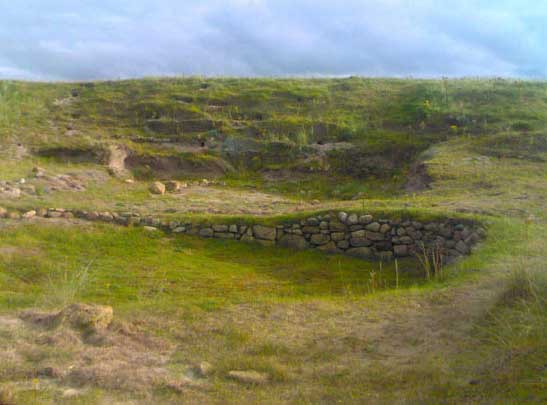
Cladh Hallan is found on the Hebridean Island of South Uist. This Bronze Age settlement was made up of seven round houses. The roundhouses were built into the earth, with their floors sunk below ground level. Three houses were excavated by a team of archaeologists led by Dr Mike Parker Pearson. The floors were formed of thin layers of sand mixed with peat ash from the hearth, incorporating small, trodden-in materials, as well as debris left on their surfaces. Amongst the materials recovered from the house floors were pottery sherds, bone, clay, shell, carbonised grain, coprolites, and tools or artefacts of pumice, stone, bone, antler, flint, quartz, fired clay, and bronze.
What makes the site of particular note is that that these houses were used not just as dwellings but also as places of ritual activity.
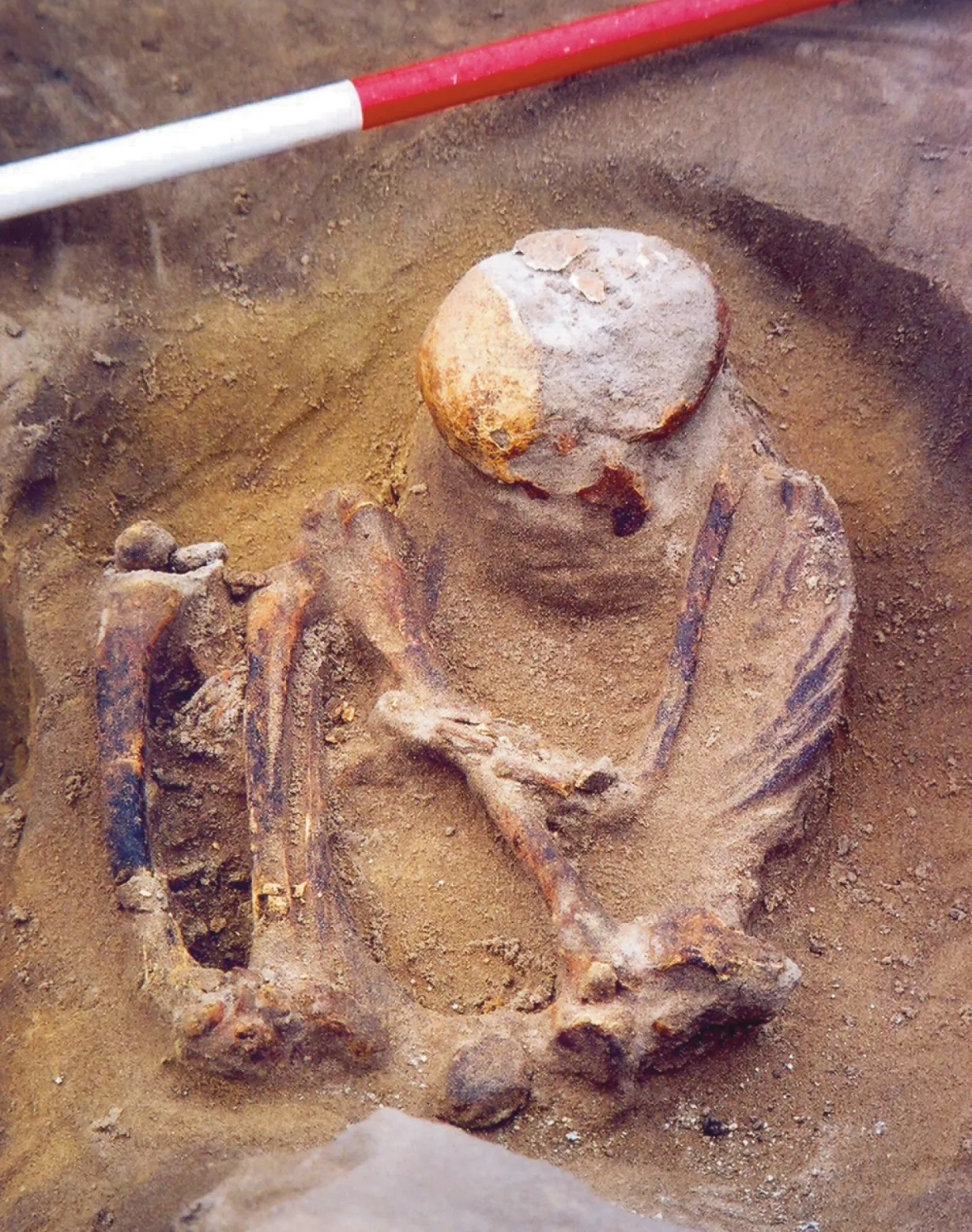
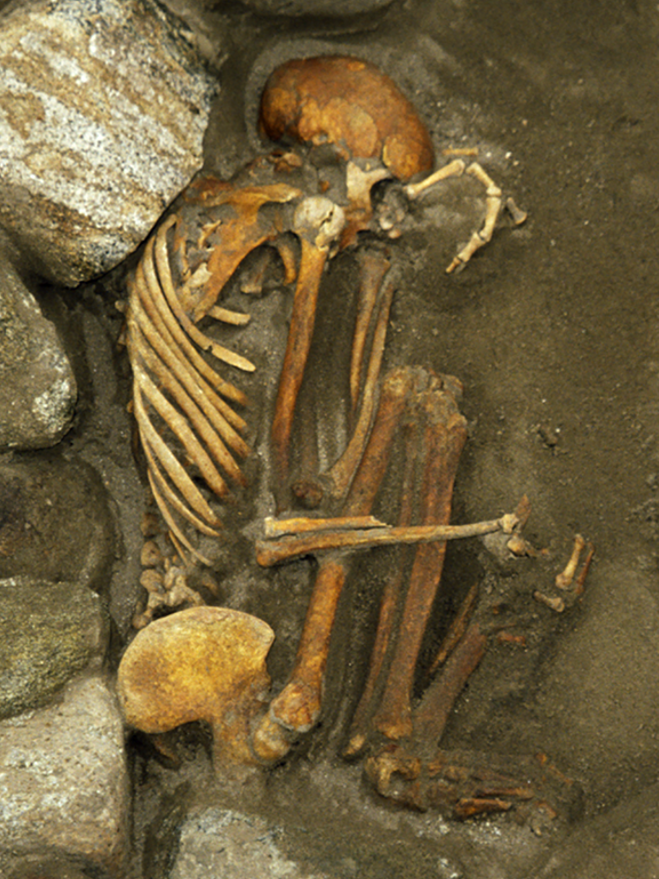
Human remains were found in the foundation deposits of each of the houses, in the northern part of the house, utilised as sleeping areas. The layout of round houses has been compared to the life journey, as shown below. In a pit in the central house , the crouched burial of a young teenager was found. In another, an infant was buried who had died some 2-3 centuries before this building was erected, indicating curation of human remains. In the third house, they found the remains of what are believed to be two mummified Bronze Age bodies, buried in the foundations under the floor. The find is the first evidence of deliberate mummification carried out in prehistory in Britain.
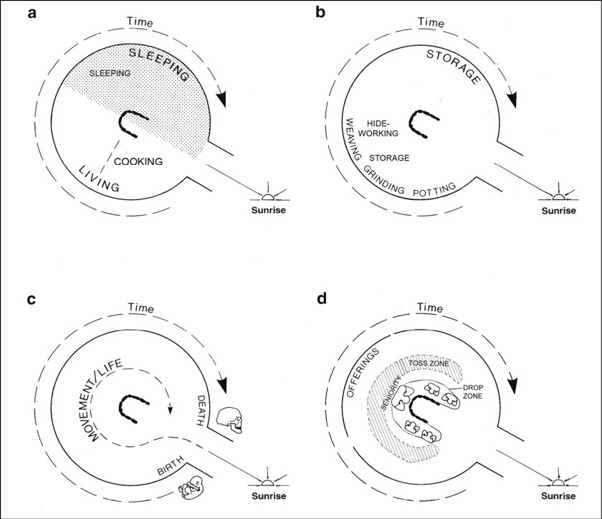
The Fitzpatrick sunwise model and its modifications. © Adrian Chadwick.
Initially it was not obvious to the archaeologists that the skeletons they discovered had been mummified, but they appeared very unusual – being very highly flexed, rather like Peruvian mummies.
Following detailed scientific tests, the first suggestion that the skeletons had come from mummified bodies arose when the radio carbon dates were analysed.
Surprisingly one individual (a female) had died in around 1,300 BC. Her body had been kept tightly wrapped for some 300 years prior to interment in this building. The woman had two of her teeth removed and placed in her hands after death.
The second male burial was more complex and puzzling as it comprised a ‘body’ made up of bones from three different individuals who had died during a period of around 150 years but had been buried a full six hundred years later, in around 1,000 BC. The head and neck belonged to one man, the jaw to another, and the rest of the body to a third. Both skeletons were intact and buried in a tight fetal position.
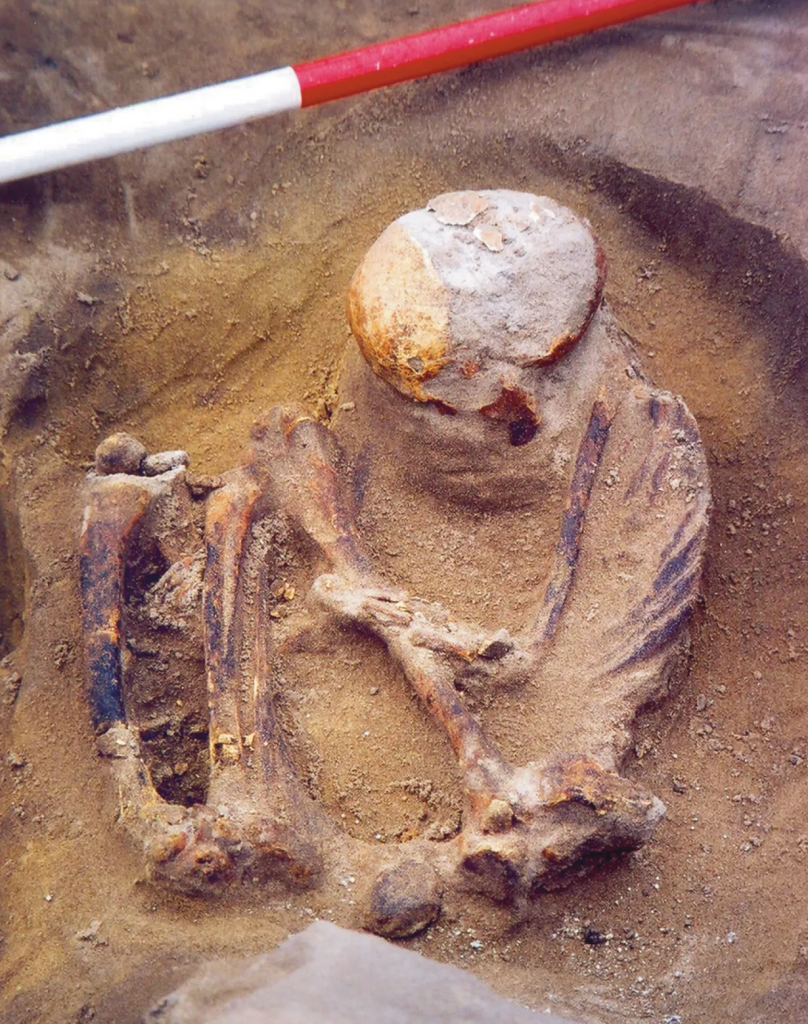
This raised a conundrum – if the skeletons had been left unburied for 600 or 300 years they would be just a pile of bones. Instead, the sinews and skin had been deliberately preserved, to permanently hold the skeletons together, indicating that the two burials from this house may have been mummified.
Given that there was no previous evidence of mummification in this period and considering the technologies and resources available in Britain during the Bronze Age, there were three main options as to how mummification had been carried out.
Firstly the bodies may have been smoked to preserve them. People of the Bronze Age had the ability to preserve meat in this manner and a smokery was excavated on the Clad Hallan site – but it dated from 1100 and 800 years, respectively, after the individuals had died.
The next possibility was that the bodies could have been wind-dried, as archaeological evidence shows that prehistoric people in some parts of Scotland’s Western Isles did use wind-drying techniques to preserve meat, especially large sea birds.
Lastly the South Uist bodies could have been preserved by being placed temporarily in a peat bog, as we know that prehistoric people understood and used the preservative properties of certain types of peat bog in Scotland and Ireland to preserve butter and tallow. Bodies of sacrificial or ritual murder victims (mainly from the Iron Age) have been found preserved in peat bogs in Britain and in continental Europe.
When a body is placed in a peat bog, in some conditions skin and sinews are tanned in much the same way that animal skin is turned into leather. The bone is also becomes demineralised. The longer it remains in the peat bog, the deeper into the bone the demineralisation process penetrates. To preserve the skeleton with skin and sinews, the body would need to be left in the bog for between 6 and 18 months, and this would result in the demineralisation of only the outer few millimetres of bone. This was the case at Cladh Hallan, where scientific analysis revealed only the outer 2mm of the bone had been demineralised.
After death, the bacteria found naturally in the gut start breaking down the body and the skeleton. The bacterial onslaught changes the bone by riddling it with tiny holes. Tests on the Cladh Hallan skeletons revealed a very low level of bacterial attack, consistent with the body being placed in a peat bog a day or two after death.
What was most intriguing was the question as to why the bodies had been mummified, and why they were buried in the foundations of the houses.
Motives for body preservation are different for cultures around the world and for different periods. In ancient Egypt, people were mummified in order to assist them to attain eternal life. In ancient Peru, the Inca emperors were mummified so that they could continue to play their part in society and their mummified corpses even attended special state banquets. In the Amazon jungle some tribes ‘mummified’ the heads of their enemies and kept them in their own homes – where their identity and spiritual strength could be utilised by those who had killed them. In Tibet and Japan holy men were mummified, while in other areas of the world the tribe’s revered ancestors were preserved for eternity and would be consulted on important tribal matters.
It is conceivable that the Cladh Hallan mummies were also important ancestral figures. In prehistoric Britain there was a tradition of reverence of ancestors, so it is likely that these mummies were seen as important ancestral figures. The tribe or clan may have believed that they possessed protective powers or even the ability to intervene with the gods or cosmic spirits on behalf of their people. In regard to the composite body Mike Parker Pearson suggests “These could be kinship components, they are putting lineages together, the mixing up of different people’s body parts seems to be a deliberate act”.
It is probable that the preserved bodies were kept over the centuries in some sort of special dwelling to accommodate the ancestors. When the complex was constructed in around 1,000 BC, the two by then rather ancient mummies, along with the body of an entire sheep (possibly a sacrifice), were buried under the house foundations, possibly to provide blessing or protection?
Over the next few hundred years rituals continued in two of the houses. A few years or decades later the cremated bones of some children were interred in the house with the mummies under the floor. A couple of decades later still, more cremated children’s bones were deposited in the house, along with several deliberately smashed pots and three smashed quern stones, then a hundred years later another baby was buried there.This house was finally abandoned in around 700 BC – but some of the other houses continued in ritual use until around 400 BC, making it the longest used settlement known from British prehistory.
Ceremony and ritual in prehistoric times was not restricted to certain sacred buildings, in the way that much of our modern religions now focus on. Places such as bogs, rivers and stone circles may have been considered liminal parts of the landscape, but ritual activities were not restricted to these areas. In other parts of Britain, Bronze Age roundhouses and settlements formed a focus for particular types of ritual practice. Acts of votive deposition were carried out at significant points in the lifecycle of the house from foundation to abandonment, while animal burials and deposits of grain and quernstones suggest an intention to maintain the fertility of land and livestock.
Deposits of human bone, metalwork and other items marked the boundaries and entrances to the settlement. Such offerings may have been thought to ensure the well-being of the household, so that the seasonal cycle may have become metaphorically linked with the lifecycle of the settlement and its inhabitants.
Ritual was part of life, of landscape, not apart from it. In a time when thriving – indeed surviving was intrinsically linked into seasons, land, plant, animal, water, warmth, shelter, these people’s understanding of life and death would have been so much deeper than we experience today.
Our modern, consumer driven culture separates us from the sacred that exists in every day, in every place. Many live without considering ritual at all, others it is only a once a week mass or at seasonal festivals. Our ancestors are hidden away in graveyards, miles away, even on different continents. How often do we spend time honouring them, consulting them, remembering them?
At a Death Wisdom training recently, we held asimple yet profound ceremony to honour our recent dead. Under ancient yew trees, we co created an altar and placed within it our ancestors. We told their stories and sat with their names and felt their presence amongst us. A rich, precious ceremony and one that we could all be doing, often.
Most of us would struggle to name our near ancestors beyond great grandparents. I am intrigued to imagine how would life be different if we had connection and relation with those who died 600 years before we lived? If we slept a few feet above their bones each night? We have lost our sense of being part of the web of life, of those that have come before and will follow us.
What could we learn from these people who literally built their lives, their days, their homes on the bones of their ancestors?
Further reading:
Cladh Hallan – Roundhouses and the dead in the Hebridean Bronze Age and Iron Age by Mike Parker Pearson, Jacqui Mulville, Helen Smith and Peter Marshall
The Archaeology of Death and Burial by Mike Parker Pearson
No responses yet