The language we use around death and dying matters.
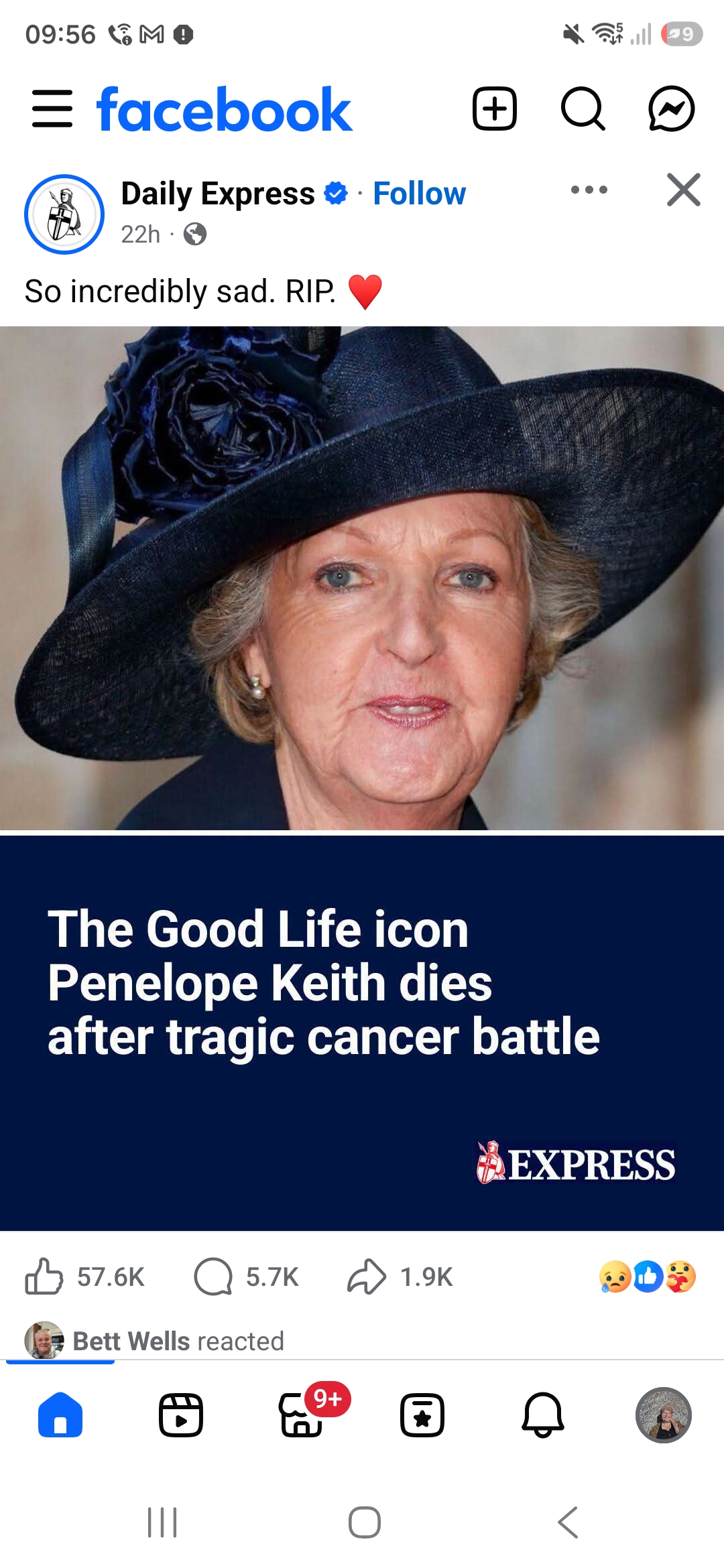
Today this post popped up on my timeline.
At first glance, it appears normal, sharing the news that a well known actress had died. It certainly saddened me, Penelope starred in many of the gentle comedy programmes we enjoyed watching as a family.
To be clear, I do not know the circumstances of her death or how she approached it. I hope she had a good death. In no way do I want to minimise the impact that the death of a well loved celebrity has upon us, and certainly do not want to minimise the grief her family and friends will be feeling.
But I’d like to look a bit closer at the words… “Penelope Keith dies after tragic cancer battle.”
I’ve spoken before about the impact of words like battle when used in relation to cancer and the judgement and pressure these terms can elicit in us who live with cancer as part of our days. So I will skip that aspect even though we can’t seem to mention cancer without the accompanying battle..
But increasingly, the media is describing any death as tragic, traumatic, terrible, horrific, awful. Take a look at any news article announcing a death and much of the time, these words inevitably creep in.
I would ask, is the death of an 86 year old woman who had lived a full, rich life and died at home really tragic?
In case I was mistaken in my interpretation of the word, I looked up the meaning of tragic and found ” causing strong feelings of sadness usually because someone has died in a way that seems very shocking, unfair, etc.” or “dreadful, disastrous, or fatal”.
Surely we should reserve those words for when they are real, when their impact is justified. To me, a tragic death is a child dying for want of medicine, a woman murdered by a jealous ex, a homeless person dying alone under a bridge…genocide, war, all these truly deserve the word tragic.
But if we over-use these high-impact words, if we repeatedly over-dramatise, over sensationalise normal events, we do two things.
Firstly, we then are numbed and desensitised to the things that really should shock us. If every death is tragic, how do we find the words to differentiate degrees of tragedy? How do we summon the emotional energy to look at another example? How do we describe the things that need to shake us to our bones, the things we need to stand up together to prevent happening again, if we have wasted them in sensationality.
Secondly, we create a culture that sees all death as something to fear, to battle, to run from. Even the death of an old woman (who, even without the cancer, would be nearing the natural end of her life) is now tragic. Living with and dying from illnesses such as cancer is normal, dying at a ripe old age is normal, not something to fear or make into a drama-fest. We do not need to fear death.
It may sound like I am picking on one word unnecessarily, but this is just one example of a growing trend that makes death something it is not. It unwittingly feeds an already death phobic culture. One word can imperceptibly raise our fears of death. One word can make death appear as universally terrifying. When that one word is repeated in many variants each and every time a death or dying is reported, it becomes the norm. Death = tragedy. Death = trauma.
But we do not have to see it that way. We could be able look at the reality, we could name death as it really is.
In a statement, Penelope’s family said that she “died peacefully whilst living with cancer at her home in Surrey”.
Isn’t this what we should be celebrating, that she had shelter, care, love, the privilege of safety and comfort in her dying?
A huge percentage of people in the world do not have this luxury in their dying time. Their deaths come in horrific ways, without care and support, alone and in fear.
Let’s honour that and keep words like tragic and traumatic for them. Let’s start to reclaim death as a natural part of living, an endless cycle that has always been and always will be. A cycle we can not avoid, but could embrace. We can all live more fully if we accept death as part of our living.
No responses yet