I have found this burial one of the most moving examples I have read about. This post has the theme of infant death and so I am aware that it may be triggering for some people, but I wanted to show ways of honouring death of little ones and how we could be more supportive to the family at the most distressing time.
This burial from Vedbæk, Denmark, is of a young woman and her newborn baby, dating back 7,000 to 6,000 years (Mesolithic times). Mesolithic people were nomadic, hunting and gathering as they moved across the landscape. As the glaciers retreated, they moved North, populating the lands we now know as Scandinavia.
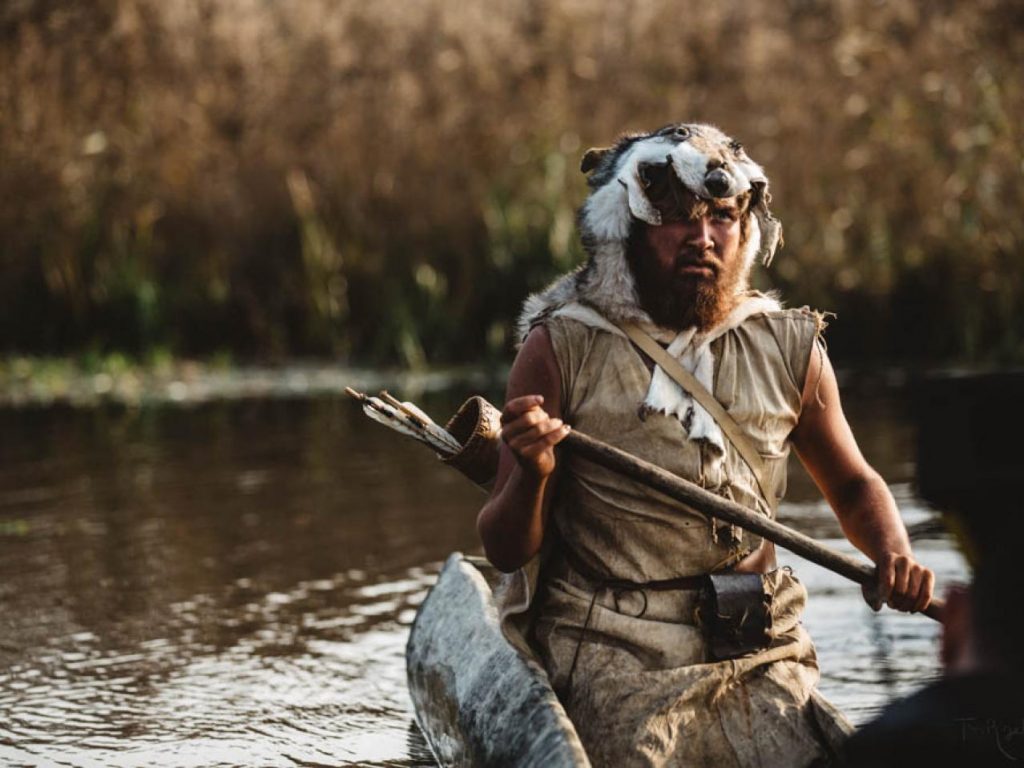
The burial sheds light on the culture and emotional depth of an ancient community. It has inspired a number of poems and artworks and I think could teach us much.
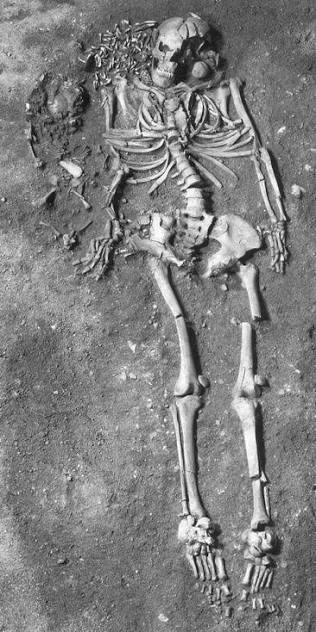
The site in Vedbæk was discovered during excavations, and contains the remains of a woman of around 20 years old, and her newborn child. Their burial tells a story not just of loss, but also of the reverence with which this community treated their dead. The evidence suggests that the woman likely died in childbirth which was all too common in prehistoric times and even more recently.
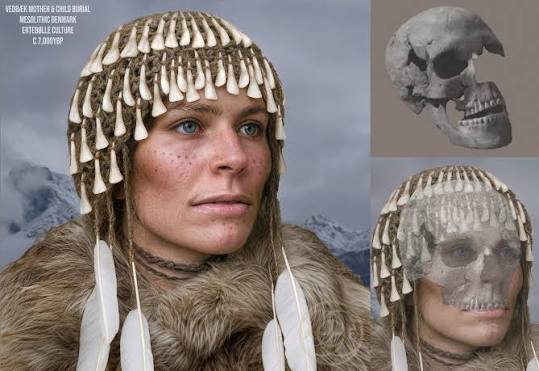
The young woman’s grave was adorned with around 200 red deer teeth placed by her head, likely part of a decorative headdress or garment. This significant number of deer teeth would have been a treasured resource and required extensive effort to harvest, so indicates a high status or a special role within her community.
These grave goods indicate a deep connection between humans and the animal kingdom, understandable due to the profound significance of the natural world in their daily lives and indeed their survival. Red deer are traditionally seen as powerful beings, representing strength and fertility. Perhaps the inclusion of these teeth was a reflection of the perceived traits of the woman, or to bring her the protective power of deer for her transition to the afterlife.
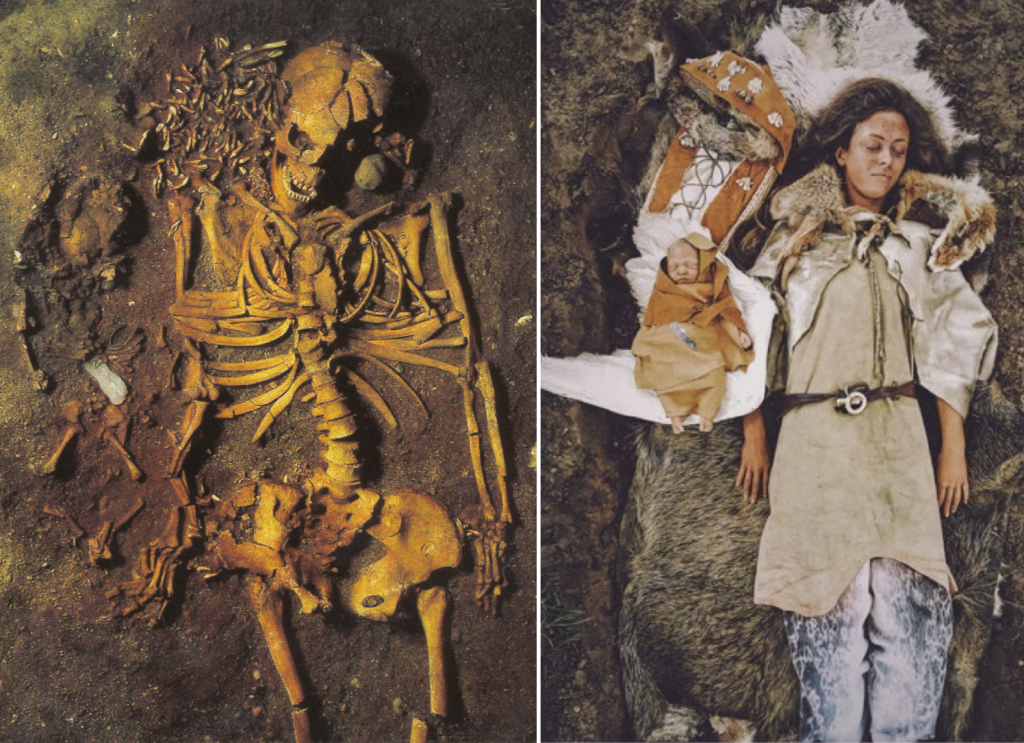
A small flint knife was found at the baby’s hip, possibly to serve as a tool to his journey to the afterlife or to symbolise the hunter he would have become if he had lived. Tools such as this were essential for survival, but it also demonstrates these people’s appreciation for functional and decorative resources and the intrinsic beauty of their land.
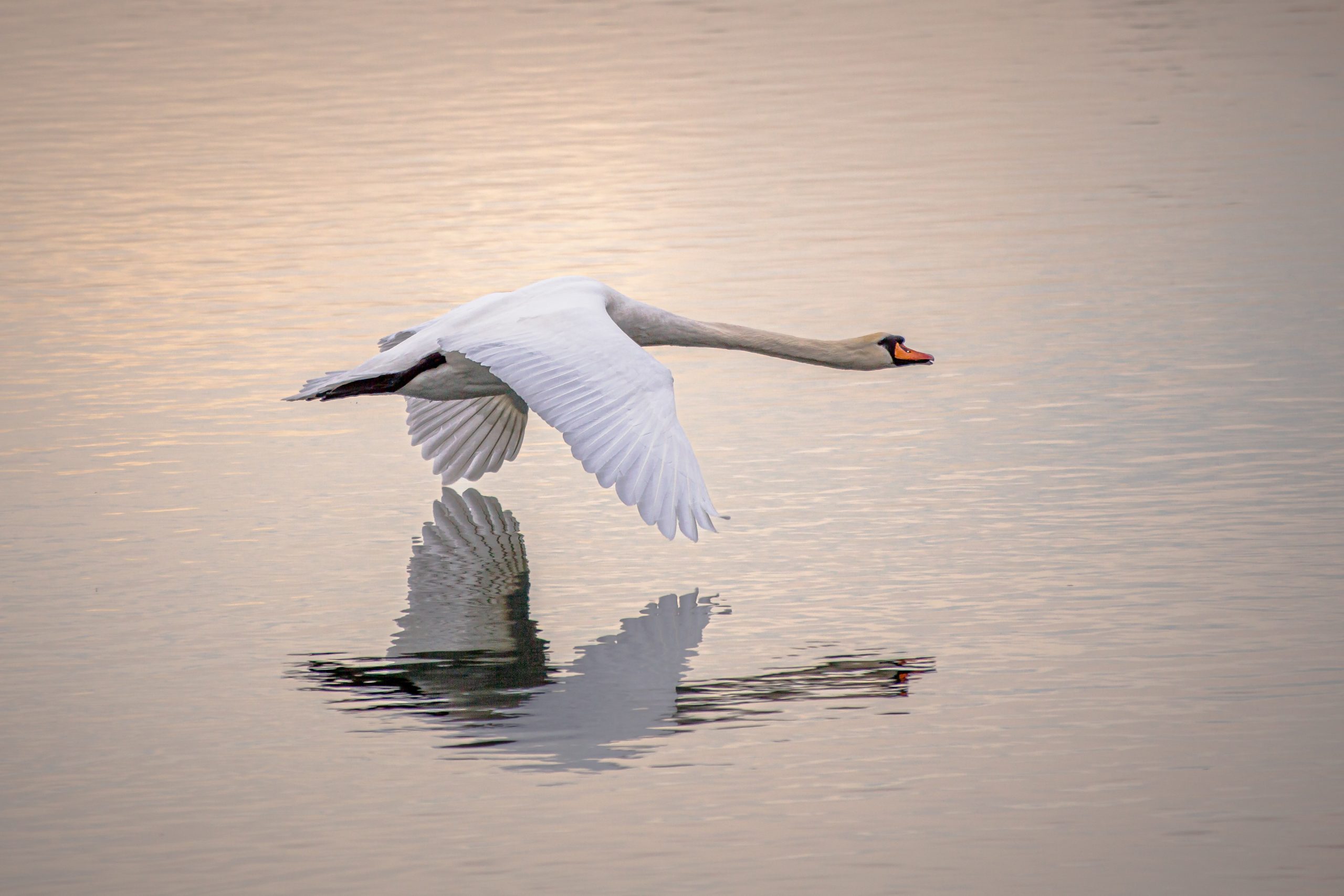
The newborn, lying next to its mother, was placed in with such tender care and grace, cradled in the embrace of a swan’s wing. The swan symbolises purity, protection, and possibly a belief in an afterlife where the child would be held and tended. Their ability to glide effortlessly between air, water, and earth mirrors the soul shifting between physical and spiritual planes.
Swans are linked in many cultures to transformation and spiritual guidance, they act as psychopomps, soul-messengers, and are seen as beings of great beauty and grace. Swans mate for life and the image of a swan is used as a metaphor of love that outlasts physical death.
In Finnish mythology, swans serve as sacred boundary-crossers and messengers of the dead, guiding souls through the waters of Tuonela (the underworld). In Greco-Roman tradition they are linked to Hermes, god of the underworld and swans were carved into ancient graves as psychopomps to safely escort youthful souls to the next life.
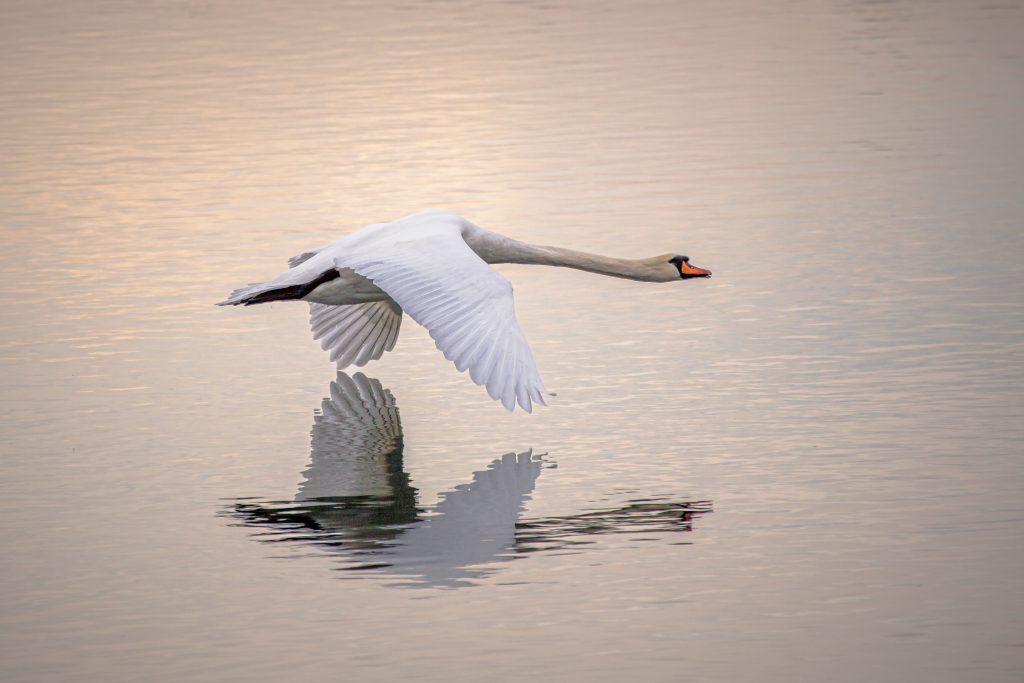
The delicacy of the swan’s wing evokes deep feelings of love and tenderness. Placed on the wing of a swan, did the community believe that his soul could then take flight? Perhaps they chose swan to reflect the entwining of love and death, earthbound and sacred, the present and eternity?
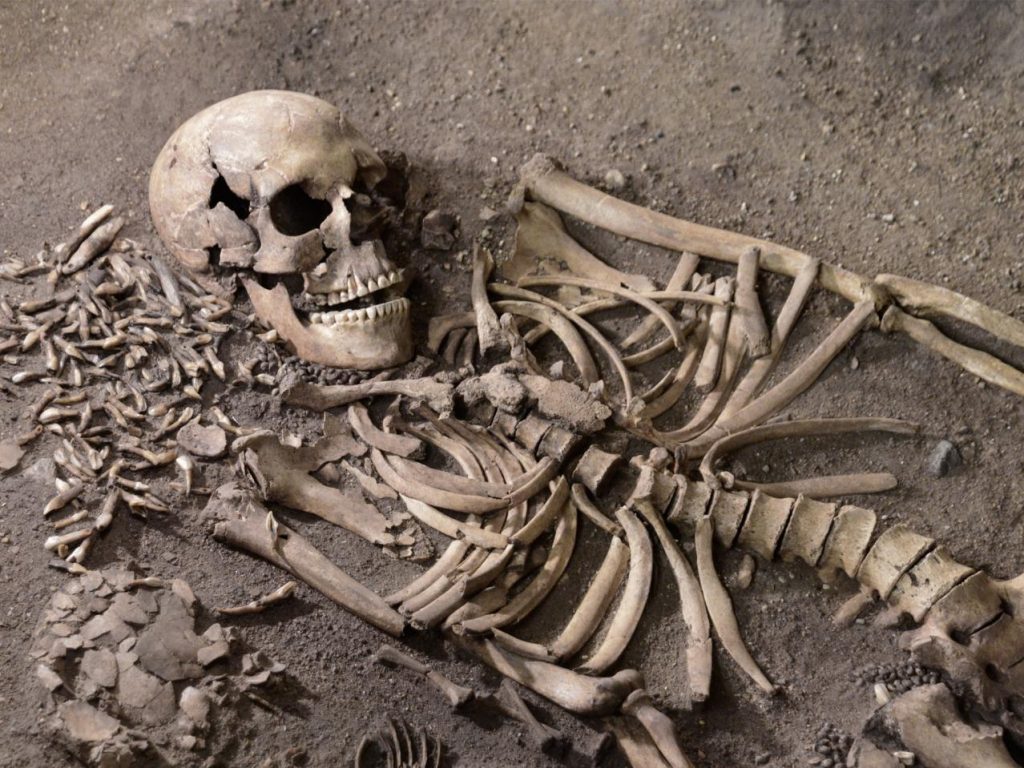
The elaborate nature of this burial shows to us the importance of both the woman and the child to their community. It demonstrates the deep emotional and cultural response of the community to such a death. It gives us the briefest hint of the customs and practices in a time when the line between the living and spiritual world was revered and actively honoured. The care taken in the burial process and the inclusion of significant grave goods indicates a complex society with rituals and beliefs centred around death and the afterlife.
I think we could learn much from this burial about how we honour short lives, how we bring tenderness, beauty and community to the death of a baby. Our culture is hugely death phobic and baby loss – whether miscarriage, stillbirth or infant death, is perhaps the most taboo. We could and should do death of any kind much better, but baby death is so shocking, so unexpected that it is often hidden away. Time and again I hear that it’s not something people feel able talk about. Friends can be so fearful of saying the wrong thing, I have been told they even cross the street to avoid speaking to bereaved parents. At a time when they most need the village to hold and care for them in their grief, they can be isolated and alone.
Perhaps instead we could come together to create ceremonies that honour life and loss, filled with beauty, symbolism, tenderness and love? How do we recognise their legacy, the loss of the person they would have become? What a difference such a tending could make to parents, siblings, family and community. All it takes is presence, the willingness to be with a tidal wave of grief, to accept our discomfort, and show up regardless. It simply requires love.
I leave you with two poems inspired by the Vedbæk burial:
Vedbæk Grave 8: The Swan Wing Burial
by Joe Glick
She lays
with deer teeth
as a halo.
A little body
lays nestled
in the embrace
of a snowy
swan wing.
His face mirrors
the beauty of
his mother,
as it pokes
from
his deer hide
swaddling.
Early from
his mother’s womb,
now early
with her
to the womb
of the beyond.
He was
her first
and only
child
after just
twenty winters
in the world.
He was
to be
a hunter
like
his father,
who gives
a flint knife
to the boy.
Father stands
looking down
at son,
wondering
if the joy
he shared
with her
could ever
grow
in the afterlife.
Now,
both lay
on hides,
eyes closed,
surrounded
by
their last gifts.
The one
who sees
and talks
with spirits
sprinkles
them both
with red ochre.
The smell
of the salty sea
fills the air
along with cries
from their kin—
the whale road
not far.
Both are
covered
with earth
and lay
for millennia
undisturbed
before
they are found.
Those
who discovered
them
wonder
if the swan wing
carried them both
to
the afterlife.
Neanderthal Dig
Don McKay
When we dug up the grave
we found a child’s bones
laid on a great swan’s wing.
They had never been, we thought,
the sharpest flints in the cave,
with thick skulls evolving toward NFL helmets.
We’d applied their name
(from Neander Vale,
site of the first remains we found)
to racists, sexists, and dull bureaucrats.
Now we stood abashed
trespassers on grief,
thoroughly sapiens
with artful implements and wit.
What would it be like to be so stricken,
with few words to call on heaven,
hell, hope, grief?
And what sharp words might we,
the clever cousins
muster for the child who one day
watched a Mute Swan (wingspan: five feet)
lift from the river
in two white swipes of Paleolithic air
What manner of wreath
might honour this death?
Some wing of language
entering earth?
Wherever you’re gone
may your spirit wander
wild as a swan
in the Vale of Neander.
Further reading
- Albrethsen, S. E., & Brinch Petersen, E. (1976). Excavation of a Mesolithic cemetery at Vedbæk, Denmark. Acta Archaeologica
- Overton, N. J., & Hamilakis, Y. (2013). A manifesto for a social zooarchaeology. Swans and other beings in the Mesolithic. Archaeological Dialogues, 20(2), 111-136. https://doi.org/10.1017/S1380203813000159
- Rudersdal Museumshttps://museer.rudersdal.dk/rudersdal-museums
No responses yet